



















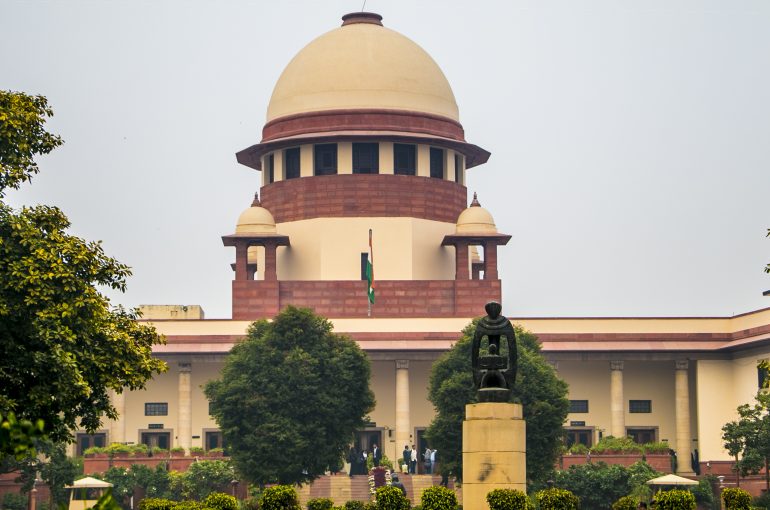
THE “RIGHT TO PRIVACY” SHIELDS NO SECRET: THE SHIFTING TIDES OF MATRIMONIAL LAW IN INDIA

For years, the phrase “Right to Privacy” under Article 21 has been wielded as an absolute shield in matrimonial litigation. Husbands and wives routinely invoked it to block the production of crucial electronic records, hotel bookings or call histories.
But the legal landscape has fundamentally shifted. A line has been drawn: the right to privacy is not a license to conceal matrimonial wrongs.
The definitive trajectory of this shift is perfectly illustrated in the long-drawn legal battle of Sachin Arora v. Manju Arora, Civil Appeal No. 400 of 2024, which began at the Delhi High Court and reached its ultimate conclusion at the Supreme Court of India.
The Core Clash: Adultery vs. Informational Privacy
The dispute arose from a divorce petition filed by the wife on the grounds of adultery and cruelty. To substantiate her claims, she sought the preservation and summoning of specific hotel booking records, payment receipts and Call Detail Records (CDRs) of her husband for a definitive period.
The husband aggressively resisted, arguing that exposing his hotel stays and phone logs would critically violate his fundamental Right to Privacy under the landmark K.S. Puttaswamy vs. Union of India, (2017) 10 SCC 1, as well as the privacy of third parties.
The High Court’s Turning Point: Striking the Balance
When the matter reached the Delhi High Court, Hon’ble Ms. Justice Rekha Palli delivered a masterful balancing act between two competing pillars of Article 21: The Right to Privacy vs. The Right to a Fair Trial.
The High Court laid down foundational principles that redefine how we view matrimonial evidence today:
- Privacy is Not Absolute: Relying on the Supreme Court’s constitutional benchmarks, the Court reiterated that privacy must accommodate public interest and morality. A married person cannot claim a fundamental right to shield an alleged extra-marital relationship under the guise of privacy.
- Fair Trial and Public Justice Rule: The right to a fair trial has wider ramifications for public justice. If courts shut out relevant circumstantial evidence at the very threshold, the affected spouse is stripped of their right to prove their case.
- The Leeway of Family Courts: Under Section 14 of the Family Courts Act, these specialized forums enjoy a relaxed evidentiary standard. They are empowered to receive any document or information that assists them in effectively resolving a dispute, bypassing the rigid confines of the Indian Evidence Act.
The Final Word from the Supreme Court
Refusing to accept the High Court’s mandate, the husband appealed to the apex court. However, the Supreme Court of India firmly put the matter to rest.
A division bench comprising Hon’ble Mr. Justice Manmohan and Hon’ble Mr. Justice K. Vinod Chandran explicitly noted that “no interference is called for with the impugned judgment,” officially dismissing the Civil Appeal. By upholding the High Court’s stance, the apex court has cemented this progressive approach into the bedrock of Indian jurisprudence.
The Takeaway for Legal Professionals
The law has undeniably changed. Courts are no longer passive bystanders when a litigating spouse attempts to weaponize “informational privacy” to obstruct justice.
While fishing and roving expeditions remain impermissible, when a spouse presents a specific, verified and prima facie case, the court will step in to ensure that truth is not sacrificed on the altar of technicalities. In modern matrimonial litigation, the right to a fair trial and the pursuit of public justice will prevail.
#LegalUpdates #FamilyLaw #RightToPrivacy #SupremeCourtOfIndia #MatrimonialLitigation #IndianJurisprudence
SUSHILA RAM VARMA
Advocate & Chief Consultant
The Indian Lawyer & Allied Services
Please log onto our YouTube channel, The Indian Lawyer Legal Tips, to learn about various aspects of the law. Our latest Video link is in below:

Leave a Reply