



















BALANCING WINGS AND WIRES: AN ECOCENTRIC TURN IN INDIA’S ENVIRONMENTAL JURISPRUDENCE

INTRODUCTION
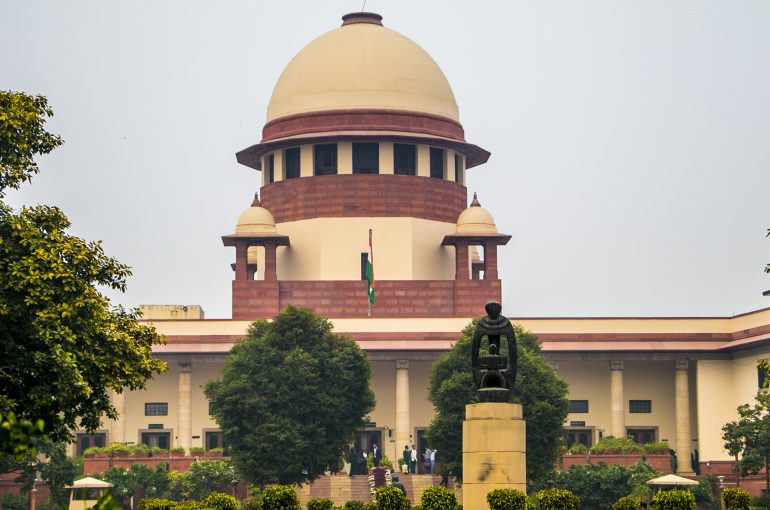
In M.K. Ranjitsinh & Others v. Union of India & Others, Writ Petition (Civil) No. 838 of 2019, along with connected matters, reported as 2025 INSC 1472, the Supreme Court of India delivered a far-reaching Judgment on 18 December 2025. The decision was rendered by a Bench comprising Justice Manoj Misra and Justice Ujjal Bhuyan.
This Judgment addresses the existential threat faced by the Great Indian Bustard (Godawan) and the Lesser Florican and marks a significant moment in Indian environmental law by carefully recalibrating the balance between wildlife conservation and India’s renewable energy commitments. It advances an eco-centric approach, recognising that environmental protection, species survival and sustainable development must coexist rather than compete.
BRIEF FACTS
The writ petition under Article 32 of the Constitution was filed seeking urgent judicial intervention to prevent the extinction of the Great Indian Bustard (GIB), a critically endangered species whose population has drastically declined, primarily due to habitat loss and fatal collisions with overhead power transmission lines.
In an interim Order dated 19 April 2021, the Supreme Court had imposed sweeping restrictions on overhead transmission lines across nearly 99,000 square kilometres in Rajasthan and Gujarat and directed large-scale undergrounding of power lines. However, the Union of India and renewable energy stakeholders later sought modification of this Order, citing technical infeasibility, safety concerns and serious implications for India’s renewable energy targets and climate commitments.
Recognising the complexity of the competing interests, the Court modified its earlier directions by an Order dated 21 March 2024 and constituted a high-level Expert Committee comprising wildlife scientists, conservationists and power sector experts. The Committee submitted detailed reports for Rajasthan and Gujarat, recommending revised priority areas, mitigation strategies and a nuanced framework balancing conservation with sustainable development. These reports, along with objections from various stakeholders, culminated in the present Judgment.
ISSUES OF LAW
The Supreme Court was essentially called upon to determine:
1) How the constitutional duty to protect wildlife and biodiversity should be balanced against national commitments towards renewable energy and climate change mitigation.
2) Whether a blanket prohibition on overhead power lines and renewable energy projects in large geographical areas was legally and practically sustainable.
3) The extent to which courts should rely on expert scientific bodies in shaping environmental policy decisions.
4) Whether corporate entities engaged in power generation bear a broader environmental responsibility beyond statutory compliance.
ANALYSIS OF THE JUDGMENT
The Court undertook an extensive analysis grounded in constitutional principles, scientific evidence and environmental jurisprudence. At the outset, it reaffirmed that the protection of endangered species is non-negotiable and flows from Articles 21, 48A and 51A(g) of the Constitution. At the same time, it acknowledged that climate change itself poses an existential threat to ecosystems and that renewable energy is indispensable to environmental protection in the long run.
Rejecting a one-size-fits-all judicial approach, the Court consciously stepped back from imposing blanket prohibitions. It accepted the Expert Committee’s recommendations that conservation must be site-specific, evidence-based and technologically informed. The revised priority areas for Rajasthan and Gujarat were approved, along with detailed mitigation measures such as selective undergrounding, rerouting of power lines, use of insulated cables, creation of dedicated power corridors and habitat restoration.
A notable aspect of the Judgment is its refusal to mechanically mandate Bird Flight Diverters (BFDs), acknowledging the lack of conclusive scientific evidence regarding their effectiveness for the GIB. Instead, the Court endorsed adaptive management, ongoing scientific studies and periodic reassessment of mitigation strategies.
Equally significant is the Court’s articulation of Corporate Environmental Responsibility. Expanding the conventional understanding of Corporate Social Responsibility, the Court held that environmental protection is not an act of charity but a constitutional and statutory obligation. Companies operating in ecologically sensitive regions were reminded that they function as guests in shared ecosystems and must internalise the environmental costs of their activities, including funding conservation efforts where their operations pose risks to endangered species.
Throughout the Judgment, the Court emphasised judicial restraint in matters of technical policy, underscoring that courts must rely on domain experts rather than substitute scientific judgment with judicial intuition.
CONCLUSION
The decision in M.K. Ranjitsinh v. Union of India represents a mature and forward-looking evolution of Indian environmental jurisprudence. Moving beyond absolutist positions, the Supreme Court has crafted a framework that harmonises wildlife conservation with sustainable development and climate action.
By embedding an eco-centric philosophy into constitutional adjudication, recognising the limits of judicial intervention and reinforcing corporate accountability towards the environment, the Judgment sets a powerful precedent for future environmental conflicts. It sends a clear message that India’s developmental trajectory must proceed not in domination over nature, but in respectful coexistence with it—lest species like the Godawan become mere footnotes in history.
SUSHILA RAM VARMA
Chief Legal Consultant & Advocate
The Indian Lawyer & Allied Services
Please log on to our YouTube channel, The Indian Lawyer Legal Tips. To learn about various aspects of the law, watch our latest video, titled –“Child Custody Laws India 2025 | Mother vs Father Rights Explained | Advocate Sushila Ram Varma”

Leave a Reply