



















CAUTION IN GRANTING ANTICIPATORY BAIL: SUPREME COURT CANCELS RELIEF IN ALLEGED SC/ST ATROCITIES CASE

INTRODUCTION
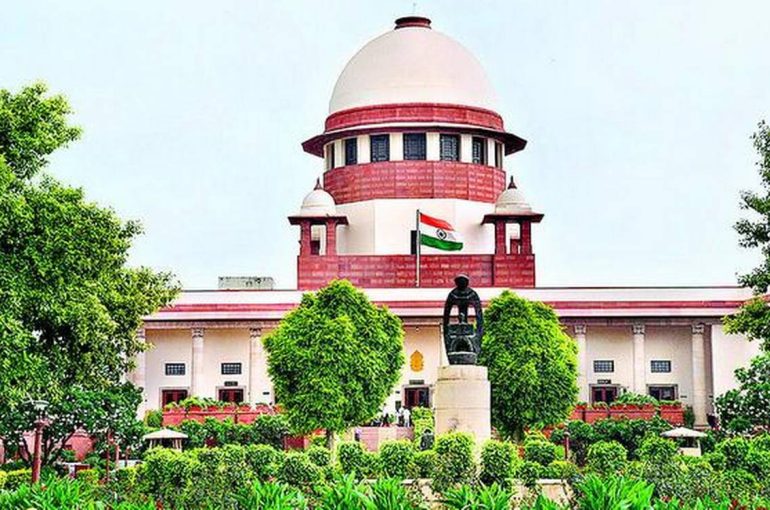
In Kuldeep Singh & Anr. v. State of Punjab & Anr., Criminal Appeal arising out of SLP (Crl.) Nos. 13439–13440 of 2025, decided on 9 March 2026, the Supreme Court of India, comprising Justice Sanjay Kumar and Justice K. Vinod Chandran, set aside the Order of the High Court granting anticipatory bail to the Accused.
The Court held that the High Court had failed to properly evaluate the available material indicating the commission of offences under the Scheduled Castes and Scheduled Tribes (Prevention of Atrocities) Act, 1989 and emphasised that courts must exercise caution while granting anticipatory bail where serious allegations of caste-based violence are involved.
BRIEF FACTS
The case arose from an incident in village Chandbhan, Punjab, allegedly triggered by a dispute regarding drainage being directed into the residential area of members of a marginalised Scheduled Caste community. According to the Complainants, protests against the drainage issue escalated into violence, during which members of the upper-caste group allegedly assaulted the villagers, fired shots and used casteist slurs.
Although the Complainants alleged that they were prevented from registering a complaint, an FIR was eventually lodged by a police officer after a video of the incident surfaced on social media showing a person firing a gun. Investigation statements recorded by the police indicated allegations of caste-based abuse and attempts to incite violence against members of the Scheduled Caste community.
The Trial Court initially refused anticipatory bail to the Accused. However, the High Court subsequently granted anticipatory bail, observing that the FIR did not clearly disclose the ingredients of offences under the SC/ST Act and relying upon precedents such as Dr. Subhash Kashinath Mahajan v. State of Maharashtra and Shajan Skaria v. State of Kerala.
Aggrieved by the High Court’s decision, the Appellants approached the Supreme Court seeking cancellation of anticipatory bail.
ISSUES OF LAW
The primary issues before the Supreme Court were:
1) Whether the High Court had erred in granting anticipatory bail despite allegations of offences under the SC/ST (Prevention of Atrocities) Act, 1989.
2) Whether the materials collected during investigation disclosed a prima facie case warranting denial of anticipatory bail.
3) Whether the High Court had correctly applied the precedents relating to anticipatory bail under the SC/ST Act.
ANALYSIS OF THE JUDGMENT
The Supreme Court reiterated that although courts generally exercise restraint in interfering with orders granting bail, such restraint cannot apply where the grant of bail ignores material evidence or relevant legal principles.
The Court noted that the High Court had relied heavily on the absence of explicit allegations of caste abuse in the FIR. However, the investigation records and witness statements indicated that casteist slurs had in fact been alleged by several witnesses and these aspects had not been properly evaluated by the High Court.
The Bench also referred to the Affidavit filed by the Deputy Superintendent of Police, which described the incident and acknowledged allegations of caste-based abuse alongside firearm discharge. These materials, in the Court’s view, clearly suggested the possibility of offences under the SC/ST Act.
While discussing earlier precedents, the Court clarified that the principles laid down in Dr. Subhash Kashinath Mahajan v. State of Maharashtra and Shajan Skaria v. State of Kerala cannot be applied mechanically. Those cases involved circumstances where either a prima facie case was absent or the alleged conduct did not relate to caste identity. The present case, however, involved allegations of caste-based violence supported by investigation materials.
The Court also observed that the High Court had overlooked the broader factual context, including the prevailing tension between communities and the possibility of violence directed against members of a marginalised group.
Further, the Court examined the video footage of the incident but clarified that its conclusion was not solely based on the footage. Instead, the video merely corroborated other material on record, including witness statements and the investigation report.
In light of these factors, the Court concluded that the High Court had granted anticipatory bail without adequate scrutiny of the available evidence.
CONCLUSION
The Supreme Court ultimately cancelled the anticipatory bail granted to the accused and directed them to surrender within fifteen days.
The Judgment underscores that while personal liberty remains a vital constitutional value, courts must exercise heightened caution in cases involving serious allegations under the SC/ST (Prevention of Atrocities) Act. Where the available material discloses a prima facie case of caste-based violence, anticipatory bail should not be granted without careful judicial scrutiny.
The ruling thus reaffirms that the protection afforded to vulnerable communities under the SC/ST Act cannot be diluted through a superficial evaluation of the facts at the stage of bail.
SARTHAK KALRA
Senior Legal Associate
The Indian Lawyer & Allied Services
Please log onto our YouTube channel, The Indian Lawyer Legal Tips, to learn about various aspects of the law. Our latest Video, titled “DO HUSBANDS HAVE A RIGHT TO MAINTENANCE UNDER INDIAN LAW?” can be viewed at: https://www.youtube.com/watch?v=XAodOc4AfTk

Leave a Reply