



















DELAY BEYOND STATUTORY TIMELINE VITIATES SARFAESI AUCTION: BORROWER’S RIGHT OF REDEMPTION PREVAILS

INTRODUCTION
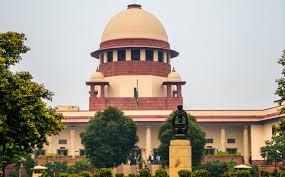
In E. Muthurathinasabathy & Ors. v. M/s Sri International & Ors., 2026 INSC 303, decided on 1 April 2026, the Supreme Court of India, comprising Justice Dipankar Datta and Justice Satish Chandra Sharma, held that non-compliance with mandatory timelines under the SARFAESI Rules renders an auction sale legally infirm, especially where the borrower has discharged the entire outstanding dues.
The Court reaffirmed that the borrower’s right of redemption cannot be defeated by an incomplete or irregular sale process, even if a sale certificate has been issued.
BRIEF FACTS
The dispute arose from recovery proceedings initiated by the Central Bank of India under the SARFAESI Act against a Partnership Firm that had defaulted on loan repayment. After classifying the account as a non-performing asset, the Bank conducted an e-auction on 4 September 2020, in which the Auction Purchasers emerged as successful bidders and deposited 25% of the bid amount.
However, due to a series of Interim Orders passed by the Debts Recovery Tribunal, the Appellate Tribunal and the High Court, the sale was not confirmed immediately. The balance 75% of the sale consideration was ultimately paid much later, on 31 March 2022, following dismissal of proceedings before the DRT. A Sale Certificate was thereafter issued and registered.
Meanwhile, the Borrowers continued to pursue remedies and eventually deposited the entire outstanding dues during the pendency of writ proceedings. The High Court set aside the Auction Sale and allowed redemption, leading to the present Appeals.
ISSUES OF LAW
The Supreme Court examined whether an auction sale under the SARFAESI Act could be sustained despite delay in payment of balance consideration beyond statutory limits and whether the borrower’s right of redemption survives even after issuance of a sale certificate, in such circumstances.
ANALYSIS OF THE JUDGMENT
The Supreme Court placed decisive emphasis on the statutory framework governing SARFAESI sales, particularly Rule 9(4) of the Security Interest (Enforcement) Rules, 2002, which mandates that the balance sale consideration must be paid within the prescribed period, extendable only up to three months. In the present case, the balance amount was paid after nearly fifteen months, far beyond the permissible period.
The Court rejected the contention that such delay could be justified by pending litigation or interim orders. It held that statutory timelines cannot be diluted merely because proceedings were ongoing, especially when the delay was not attributable to the Borrower. A sale conducted in violation of mandatory timelines cannot attain legal finality and remains inherently defective.
Importantly, the Court clarified that the High Court’s Interim Order had permitted acceptance of the balance consideration and therefore, there was no legal impediment preventing timely compliance. The failure to adhere to the statutory timeline thus operated against the Secured Creditor and the Auction Purchasers.
The Court further distinguished earlier precedents where auction sales were protected on the ground of finality. It held that such protection applies only where the sale process has been completed strictly in accordance with law. In the present case, the sale had not attained finality in the manner contemplated by the statute.
A crucial aspect of the Judgment is its reaffirmation of the Borrower’s right of redemption. The Court relied on established principles to hold that this right subsists until a legally valid and complete sale is effected. Since the Borrowers had, in the meantime, discharged the entire outstanding liability under judicial directions, their right to redeem the property could not be extinguished.
The Court emphasised that the object of the SARFAESI Act is recovery of dues and not unjust deprivation of property. Where the borrower has repaid the entire debt, permitting the sale to stand despite procedural illegality would result in disproportionate consequences and violate principles of fairness.
CONCLUSION
The Supreme Court dismissed the Appeals and upheld the High Court’s decision setting aside the Auction Sale. It held that a sale conducted in breach of statutory timelines cannot defeat the borrower’s right of redemption, particularly when the entire outstanding amount has been repaid.
The ruling reinforces that strict compliance with SARFAESI procedures is mandatory and that the rights of borrowers cannot be extinguished through a legally flawed process. It also underscores that recovery mechanisms must operate within the bounds of fairness and legality, ensuring that enforcement does not become a tool for unjust deprivation of property.
SUSHILA RAM VARMA
Advocate & Chief Consultant
The Indian Lawyer & Allied Services
Please log onto our YouTube channel, The Indian Lawyer Legal Tips, to learn about various aspects of the law. Our latest Video, titled “Can AI replace an advocate’s job? || Artificial Intelligence in Legal Profession” can be viewed at the link below:

Leave a Reply