



















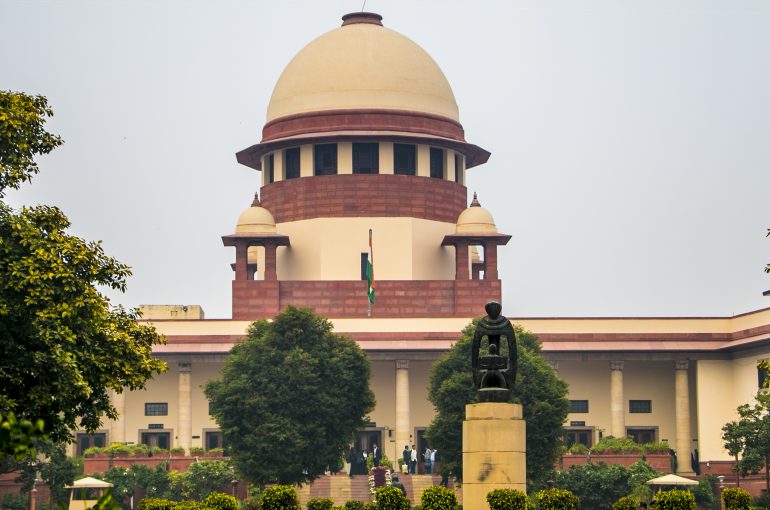
FRESH SECTION 11 APPLICATION BARRED AFTER ABANDONMENT OF EARLIER ARBITRATION: SUPREME COURT CLARIFIES LAW

INTRODUCTION
In Rajiv Gaddh v. Subodh Prakash, 2026 INSC 302, decided on 1 April 2026, the Supreme Court of India, comprising Justice Pamidighantam Sri Narsimha and Justice Alok Aradhe, the Supreme Court examined whether a party can file a fresh Section 11 Arbitration Application after abandoning earlier proceedings on the same cause of action.
BRIEF FACTS
1. The Appellant and Respondent jointly participated in an auction of 550 marlas of land in Hoshiarpur, Punjab, financed via a company and a bank loan.
2. Three Agreements were executed on 02.04.2013 to resolve disputes regarding the land and joint ventures. These included arbitration clauses.
3. The Respondent initially invoked arbitration in 2015, but later ceased participation, alleging bias. The Arbitrator proceeded and passed an award favouring the Appellant.
4. After this, the Respondent filed a fresh Section 11 Application in 2021 seeking appointment of an arbitrator.
5. By the Impugned Order dated 08.11.2024, the High Court allowed the Application, holding that the question of res judicata need not be addressed during Section 11 proceedings and may be determined by the arbitral tribunal.
ISSUES OF LAW
1. Whether the Respondent abandoned the earlier arbitration proceedings.
2. Whether a fresh Section 11 Application was maintainable given the prior abandonment and the same cause of action.
3. Whether res judicata principles or Order 23 Rule 1 of the CPC applied to bar the subsequent application.
ANALYSIS
Scope of Section 11 Appointment of Arbitrators under the Arbitration Act
The Court emphasized that the jurisdiction under Section 11 of the Arbitration and Conciliation Act, 1996, is limited to determining whether a valid arbitration agreement exists. It is not meant to examine the merits of the dispute or issues such as res judicata. The question of whether a claim is barred by prior proceedings is not to be adjudicated at the Section 11 stage but is for the Arbitral Tribunal to consider during substantive arbitration.
Abandonment of Earlier Proceedings:
The Respondent had initiated Arbitration in 2015 but subsequently refused to participate in the proceedings, repeatedly citing alleged bias. By his conduct of non-appearance, failure to respond and communicating withdrawal the Court inferred that the Respondent had effectively abandoned the initial Arbitration. This conduct satisfies the legal standard for abandonment, which requires clear and unambiguous evidence that a party has relinquished the claim.
Application of Order XXIII Rule 1 of CPC (Withdrawal of suit or Abandonment of part of Claim:
Order XXIII Rule 1 of the Code of Civil Procedure bars a party from initiating a fresh suit or proceeding based on the same cause of action if a prior suit was withdrawn or abandoned without the leave of the court. The Supreme Court applied this principle to arbitration, noting that a Section 11 Application is procedural in nature but still subject to public policy considerations. The Respondent could not circumvent the law by filing a second application on the same dispute after abandoning the first.
Same Cause of Action:
The subsequent application filed by the Respondent did not present a new cause of action. The dispute between the Appellant and Respondent arose from the same agreements and auction of land in Hoshiarpur. The earlier Civil Appeal regarding the auction did not generate any new cause of action for the Respondent; thus, the fresh Section 11 Application was based on identical facts and issues. Allowing it would amount to abuse of process and undermining the finality of judicial and arbitral proceedings.
Abuse of Process and Public Policy Considerations:
The Court highlighted that allowing a fresh arbitration application after clear abandonment would encourage repeated litigation and misuse of judicial and arbitration processes. It underscored that public policy requires barring redundant proceedings to maintain the integrity of the legal system and prevent harassment of parties.
CONCLUSION
The Supreme Court held that the Respondent had effectively abandoned the earlier arbitration proceedings through his repeated non-participation and communications. Consequently, the subsequent application under Section 11 of the Arbitration and Conciliation Act was deemed inadmissible, as it arose from the same cause of action and violated the principles set out under Order XXIII Rule 1 of the Code of Civil Procedure.
As a result, the High Court’s Order appointing an Arbitrator was set aside, and the Appeal filed by the Appellant was allowed. The Court chose not to impose any costs, leaving each party responsible for their own expenses.
This judgment underscores that parties cannot circumvent procedural safeguards or public policy by repeatedly initiating arbitration applications on identical disputes.
TRISHMA KASHYAP
Legal Associate
The Indian Lawyer & Allied Services
Please log onto our YouTube channel, The Indian Lawyer Legal Tips, to learn about various aspects of the law. Our latest Video, titled “Can AI replace an advocate’s job? || Artificial Intelligence in Legal Profession” can be viewed at the link below:
Leave a Reply