



















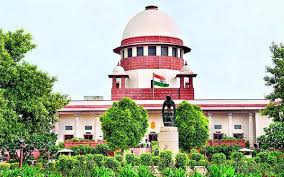
GENDER EQUALITY IN ARMED FORCES: PERMANENT COMMISSION FOR WOMEN OFFICERS

INTRODUCTION
In Lt. Col. Pooja Pal & Ors. v. Union of India & Ors 2026 SCC OnLine SC 468.,
decided on 24 March 2026, the Supreme Court of India delivered a significant
judgment addressing the persistent issue of gender inequality within the Armed
Forces, particularly in relation to the grant of Permanent Commission (PC) to Short
Service Commission Women Officers (SSCWOs). The decision represents a
continuation and deepening of the constitutional principles articulated in earlier
landmark rulings such as Secretary, Ministry of Defence v. Babita Puniya and Lt.
Col. Nitisha v. Union of India, while also expanding the jurisprudence on structural
discrimination and substantive equality.
The Court examined whether the denial of Permanent Commission to women
officers was merely a result of comparative merit or whether it stemmed from
systemic and institutional disadvantages embedded within the evaluation framework
itself. It categorically held that inclusion of SSCWOs in the zone of consideration for
Permanent Commission is not a matter of administrative discretion but a
constitutional obligation flowing from Articles 14 and 15 of the Constitution. The
Judgment thus situates itself at the intersection of service law and constitutional
equality, recognising that formal equality cannot remedy deeply entrenched
structural inequities.
BRIEF FACTS OF THE CASE
The Appellants in the present case comprised a group of Short Service Commission
Women Officers who had been commissioned into the Indian Army between the
years 2010 and 2012. These Officers were among the earliest batches to be
considered for Permanent Commission alongside their male counterparts pursuant
to the evolving legal framework following judicial intervention in earlier cases. Upon
completion of the requisite period of service, they were evaluated by the No. 5
Selection Board, which is responsible for assessing eligibility for the grant of
Permanent Commission.
However, the results of the selection process revealed a disproportionately low
success rate for women officers. Aggrieved by their non-selection, the Appellants
approached the Armed Forces Tribunal (AFT), contending that the evaluation
process was inherently biased and failed to account for the structural disadvantages
they had faced throughout their careers. The AFT dismissed their Applications,
holding that there was no discrimination and that the denial of Permanent
Commission was attributable solely to lower comparative merit.
Challenging this finding, the Appellants approached the Supreme Court, asserting
that the so-called “merit-based” evaluation was itself skewed by systemic
inequalities, including unequal access to opportunities, biased performance
appraisals, and historical exclusion from long-term career progression.
ISSUE INVOLVED
The principal issue before the Supreme Court was:
Whether denial of Permanent Commission to SSCWOs was discriminatory in
nature;
Whether evaluation mechanisms such as ACRs and selection criteria were
inherently biased;
Whether the cap on vacancies (250 per year) could justify exclusion;
Whether male officers had legitimate expectations of exclusive consideration
for PC.
ANALYSIS BY THE SUPREME COURT
The Supreme Court undertook a detailed and nuanced analysis of the institutional
framework governing the careers of Short Service Commission Officers and
identified multiple layers of structural disadvantage affecting women officers. A
central aspect of the Court’s reasoning was its examination of the role of Annual
Confidential Reports (ACRs), which constituted a significant component of the
evaluation process, carrying substantial weight in determining an officer’s suitability
for Permanent Commission.
The Court observed that the ACRs of women officers had been systematically
affected by the historical context in which they were written. At the time when many
of these reports were prepared, women officers were not considered eligible for
Permanent Commission, which led to a normalization of lower or average grading.
Since there was no real expectation of long-term career progression, reporting
officers had little incentive to award higher gradings or to evaluate women officers
with the same rigor as their male counterparts. Consequently, the ACRs failed to
accurately reflect the true potential and capabilities of the appellants, thereby
distorting their comparative merit.
In addition to the issue of biased evaluation, the Court highlighted the unequal
access to career-enhancing opportunities. It found that women officers were
consistently denied criteria appointments, which are crucial for demonstrating
leadership and gaining higher responsibility, as well as access to important training
courses that significantly impact professional development. Despite this disparity in
preparation and exposure, women officers were evaluated on the same parameters
as male officers, creating an inherently unequal playing field. The Court employed a
compelling analogy, likening the process to a race in which participants are required
to compete on equal terms despite having been provided vastly different levels of
training and preparation.
The Court further addressed the argument relating to the cap of 250 vacancies per
year for the grant of Permanent Commission. While acknowledging that matters of
cadre management fall within the domain of policy, the Court clarified that such
policies are not immune from judicial review. It held that the vacancy cap cannot be
treated as rigid or sacrosanct, particularly where its application results in
perpetuating inequality. In circumstances where the method of evaluation is itself
flawed and discriminatory, strict adherence to such a cap would only exacerbate
injustice.
Another important issue considered by the Court was the claim of male officers that
they had a legitimate expectation of being considered for Permanent Commission
within a pool that was historically exclusive to them. The Court rejected this
argument, holding that once the exclusion of women from consideration had been
declared unconstitutional, any expectation based on such exclusion could not be
considered legitimate.
The Judgment is particularly notable for its articulation of the concept of structural
discrimination. The Court emphasised that the disadvantage suffered by the
Appellants was not the result of isolated instances of bias but was embedded in the
very framework governing their service conditions. This recognition marks a shift
from a narrow understanding of discrimination to a broader, more substantive
approach that takes into account systemic inequalities.
Finally, in order to ensure complete justice, the Court invoked its extraordinary
powers under Article 142 of the Constitution. This allowed it to craft remedies that
went beyond the limitations of existing statutory frameworks and addressed the
consequences of past discrimination in a meaningful way.
DECISION AND DIRECTIONS
In its final decision, the Supreme Court held that the denial of Permanent
Commission to the Appellants was rooted in a systemic framework that
disadvantaged women officers and therefore could not be sustained. The Court
directed that the grant of Permanent Commission already made in previous selection
processes would not be disturbed. At the same time, it introduced a one-time
remedial measure for those women officers who had been released from service
during the pendency of the proceedings. These officers were deemed to have
completed the requisite qualifying service of twenty years and were made entitled to
pension and all consequential benefits, although arrears were restricted to a
specified period.
The Court further directed that pensionary benefits would be calculated based on the
deemed completion of twenty years of service, with payments to be made
prospectively from 1 January 2025. In addition, the Court emphasised the need for
systemic reform and directed a review of the evaluation mechanisms, including the
method of assessment of ACRs and the determination of cut-off marks, to ensure
that future batches of officers are not subjected to similar disadvantages. It also
clarified that officers aggrieved by subsequent selection processes would be free to
pursue remedies in accordance with law.
CONCLUSION
The Judgment in Lt. Col. Pooja Pal v. Union of India represents a significant
advancement in the constitutional jurisprudence on gender equality, particularly
within the context of the Armed Forces. By recognising and addressing structural
discrimination, the Supreme Court moved beyond a formalistic understanding of
equality and embraced a more substantive approach that takes into account the
realities of institutional bias.
The decision underscores that true equality requires not only equal treatment but
also equal opportunity, which in turn necessitates the removal of systemic barriers
that hinder fair competition. Through its invocation of Article 142, the Court ensured
that justice was not merely declaratory but also practical and effective.
Ultimately, the Judgment reaffirms the principle that constitutional mandates cannot
be subordinated to administrative convenience or historical practices. It sends a
strong message that institutions must evolve to reflect the values of equality and
fairness, thereby strengthening the foundations of a truly inclusive legal and
administrative framework.
Contributed by-
Rithik Dhariwal
Advocate
Please log onto our YouTube channel, The Indian Lawyer Legal Tips, to learn about
various aspects of the law. Our latest Video, titled “Can AI replace an advocate's
job? || Artificial Intelligence in Legal Profession” can be viewed at the link below:

Leave a Reply