



















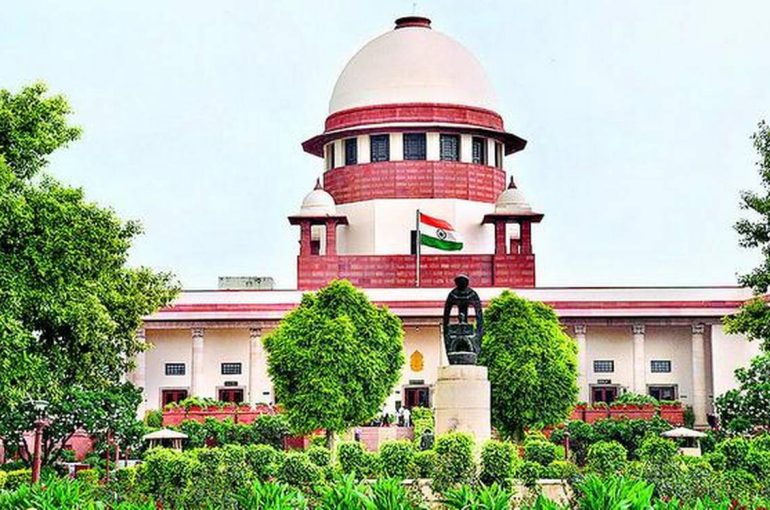
SUPREME COURT HOLDS PASSPORT RENEWAL CAN’T BE DENIED DUE TO PENDENCY OF CRIMINAL CASE WHEN TRIAL COURT HAS PERMITTED RENEWAL

Introduction
In a significant ruling reaffirming the sanctity of personal liberty against bureaucratic rigidity, the Supreme Court of India has paved the way for the renewal of passports for individuals facing criminal charges, provided they have secured appropriate judicial clearances. The Judgment was delivered in the case of Mahesh Kumar Agarwal v. Union of India & Anr. (Civil Appeal arising out of SLP (Civil) No. 17769 of 2025). The Bench, comprising Hon’ble Mr. Justice Vikram Nath and Hon’ble Mr. Justice Augustine George Masih, delivered the verdict on December 19, 2025. The Court unequivocally held that the Passport Authority cannot act as a “supervisory” body over criminal courts and must issue passports when the concerned courts have granted a “No Objection,” even if specific travel dates are not yet determined.
Factual Background
The Appellant, Mahesh Kumar Agarwal, found himself entangled in a complex web of legal proceedings involving two distinct criminal cases. First, he was an accused in a case investigated by the National Investigation Agency (NIA) in Jharkhand, involving serious charges under the Unlawful Activities (Prevention) Act (UAPA) and the Indian Penal Code. While he was granted bail, his passport was deposited with the NIA Court in Ranchi. Second, he was convicted in a separate CBI case concerning coal block allocations in New Delhi, where he was sentenced to four years imprisonment. However, the Delhi High Court had suspended his sentence pending his appeal.
As his ordinary passport expired in August 2023, the Appellant sought permission from both respective courts to renew it. The NIA Court, Ranchi, granted a “No Objection” for renewal for ten years, subject to the condition that the renewed passport be immediately re-deposited with the court. Similarly, the Delhi High Court granted permission for the renewal of the passport for a period of ten years, maintaining the condition that he could not leave the country without prior permission.
Subsequently, the Appellant applied to the Regional Passport Office (RPO), Kolkata. However, the application was stalled. The RPO, relying on statutory bars, refused to renew the passport for the full ten-year term. The Appellant’s subsequent writ petition and appeal before the Calcutta High Court were dismissed. The High Court reasoned that under Section 6(2)(f) of the Passports Act, 1967, the pendency of criminal proceedings acted as a bar and the exemption notification (G.S.R. 570(E)) only applied if the court specifically authorized a “departure” for a fixed period, which, in their view, had not occurred.
Court’s Decision
The Supreme Court allowed the Appeal, setting aside the orders of the Calcutta High Court.
1. Liberty is a Fundamental Obligation:
The Judgment began with a powerful observation: “Liberty, in our constitutional scheme, is not a gift of the State but its first obligation.” The Court reiterated that the Right to Travel and hold a passport are facets of personal liberty under Article 21. While the State can regulate this right, it cannot impose disproportionate or indefinite restrictions.
2. Interpretation of Section 6(2)(f) and G.S.R. 570(E):
The Court rejected the rigid interpretation of the Passport Act adopted by the lower Court. It clarified that while Section 6(2)(f) bars the issuance of passports to those facing trial, this bar is subject to Section 22, which allows for exemptions. Notification G.S.R. 570(E) is the mechanism for this exemption. The Court held that this Notification does not require a court to authorize a specific “holiday” or journey. Instead, if a criminal court permits the renewal of a passport and retains the power to regulate actual travel (by requiring prior permission for every trip), the statutory concern of securing the Accused’s presence is fully met.
3. Administrative Overreach:
The Bench critiqued the Passport Authority for effectively second-guessing the criminal courts. Once the courts had applied their mind and granted a “No Objection” for a ten-year renewal, the Passport Authority’s refusal amounted to an unjustified administrative barrier. The Court noted that the “permission to depart” required by the notification is inherent when a court allows renewal while imposing a condition to seek permission before travelling.
4. Distinction between Conviction and Trial:
Regarding the conviction in the Delhi case, the Court noted that Section 6(2)(f) applies to pending proceedings. Post-conviction cases fall under Section 6(2)(e). However, since the Appellate Court (Delhi High Court) had suspended the sentence and expressly permitted passport renewal, the bar was lifted in that context as well.
Conclusion
The Supreme Court directed the Respondents to issue an ordinary passport to the Appellant for a period of ten years within four weeks. The Judgment serves as a crucial precedent, establishing that procedural safeguards in the Passports Act cannot be weaponized to deny citizens their fundamental documents when the judiciary has already exercised its discretion in their favor. It clarifies that possession of a passport is a civil right distinct from the act of travelling and as long as the courts retain control over the latter, the former cannot be denied by the executive.
YASH HARI DIXIT
LEGAL ASSOCIATE
THE INDIAN LAWYER AND ALLIED SERVICES
Please log onto our YouTube channel, The Indian Lawyer Legal Tips, to learn about various aspects of the law. Our latest Video, titled “Child Custody Laws India 2025 | Mother vs Father Rights Explained | Advocate Sushila Ram Varma” can be viewed at the link below:
Leave a Reply