



















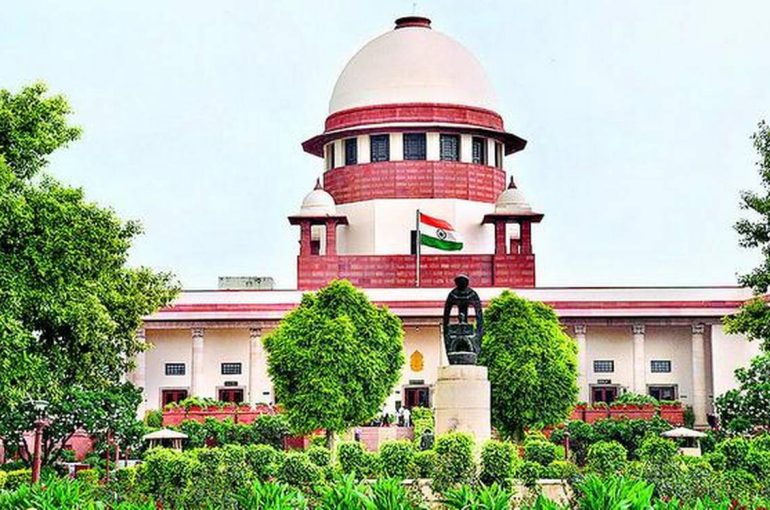
SUPREME COURT HOLDS THAT POLICE CAN FREEZE BANK ACCOUNTS INVOKING S.102 CRPC IN CASES UNDER PREVENTION OF CORRUPTION ACT

Introduction
The Supreme Court of India in The State of West Bengal v. Anil Kumar Dey, (Criminal Appeal No. 5373 of 2025 arising out of SLP (Crl.) No. 1003 of 2025), delivered a significant Judgment on 10 December 2025 on the scope of police powers to freeze bank accounts in corruption cases. The Appeal was heard by the Bench of Justice Sanjay Karol and Justice Prashant Kumar Mishra. The Judgment examines the interface between Section 102 of the Code of Criminal Procedure, 1973 (CrPC) and Section 18A of the Prevention of Corruption Act, 1988 (PC Act) and clarifies whether these powers are co‑existent or mutually exclusive in cases involving disproportionate assets.
Factual Background
The proceedings arose out of a preliminary enquiry conducted by the Anti‑Corruption Branch, West Bengal, against one Prabir Kumar Dey Sarkar, a police officer who had joined service as a constable in 1979 and subsequently rose to the rank of Inspector. The enquiry revealed that during the check period from 2007 to 2017, he drew net salary of about Rs. 40,08,090, with likely savings estimated around Rs. 26,72,060, but was found to be in possession of movable and immovable assets, in his name and that of his relatives, worth about Rs. 1,49,18,628, far exceeding his known sources of income. These assets included building costs, cash and gold seized from his residence, a flat, landed property, insurance premia and school fees, while the valuation of certain other properties was not even factored into the calculation. On the basis of this material, an FIR bearing No. 09/19 was registered under Section 13(2) read with Section 13(1)(b) of the PC Act. During investigation, several fixed deposits standing in the name of the Respondent, Anil Kumar Dey (father of the main accused), were frozen, including accounts in Axis Bank and State Bank of India, many held jointly with other family members. Anil Kumar Dey, a 93‑year‑old pensioner, moved the City Sessions Court, Calcutta, seeking de‑freezing of these deposits, but his application was rejected on 28 March 2023 on the ground that the investigation was continuing and he had not satisfactorily disclosed the source of funds. Subsequently, sanction for prosecution was obtained and a chargesheet dated 13 May 2024 named four accused: Prabir Kumar Dey Sarkar, his wife Dipa, his father Anil (the respondent) and his brother Subir, with the chargesheet noting numerous fixed deposits and unexplained cash deposits in the accounts of these family members.
Court’s Decision
The Supreme Court began by analysing the text and context of Section 102 CrPC, Section 18A PC Act and the attachment provisions of the Criminal Law Amendment Ordinance, 1944. By referring to standard legal dictionaries, the Court distinguished “seizure” (taking possession of property by an officer under legal authority) from “attachment” and “confiscation” (judicially‑supervised processes that may culminate in forfeiture of property to the State). Te Court reiterated that Section 102 permits seizure (including freezing of bank accounts) of property allegedly linked to an offence, that such freezing must aid investigation and that seizure of immovable property is outside its scope. The Court then set out in detail the stepwise procedures for attachment under the Ordinance, the Prevention of Money Laundering Act, 2002 and the Income Tax Act, 1961, to highlight that attachment involves multiple stages i.e. application, judicial satisfaction, ad‑interim orders, notice, objections, confirmation, appeal and possible security in lieu of attachment. On that comparative analysis, the Court held that attachment is a structured, deliberative process designed to secure property for potential confiscation, whereas seizure under Section 102 CrPC is an immediate police measure to secure evidence or suspected tainted property during investigation. Accordingly, the powers under Section 102 CrPC and Section 18A PC Act are co‑existent and not mutually exclusive and the existence of a special attachment procedure does not impliedly repeal or exclude the general investigative power of seizure. The Court also clarified the limited precedential value of Ratan Babulal Lath, observing that its observations on the PC Act being a self‑contained code were not founded on a detailed statutory and factual analysis and therefore could not be treated as binding ratio decidendi under Article 141. While recognizing that certain statutes may operate as self‑contained codes, the Court held that the PC Act, even with Section 18A, does not oust the operation of Section 102 CrPC where the police act to seize or freeze property in aid of an ongoing investigation. On this reasoning, the Judgment of the Calcutta High Court, which had set aside the freezing only because Section 102 CrPC was invoked instead of Section 18A, was found unsustainable and the Supreme Court upheld the permissibility of freezing under Section 102 in corruption cases, subject to statutory safeguards.
Conclusion
The Judgment settles an important question on the relationship between general police powers under the CrPC and special attachment mechanisms under the PC Act in disproportionate assets cases. By affirming that Section 102 CrPC and Section 18A PC Act operate in distinct though overlapping spheres, the Court preserves the agility of investigation through seizure while insisting that any move towards long‑term deprivation or confiscation of property must pass through the more rigorous, judicially‑supervised attachment framework. For investigating agencies, the ruling endorses the continued use of account‑freezing orders under Section 102 CrPC in corruption probes, while for accused and third parties, it underscores that such orders must be tied to genuine investigative needs and remain subject to judicial oversight and eventual testing within the statutory attachment and confiscation regime.
YASH HARI DIXIT
ASSOCIATE
THE INDIAN LAWYER AND ALLIED SERVICES
Please log onto our YouTube channel, The Indian Lawyer Legal Tips, to learn about various aspects of the law. Our latest Video, titled “Rights of Husband in False Matrimonial Cases | 498A Misuse | 2025 Judgments Explained|” can be viewed at the link below:

Leave a Reply