



















LIBERTY, VICTIM’S VOICE AND JUDICIAL DISCIPLINE: RECALIBRATING BAIL JURISPRUDENCE UNDER THE SC/ST (PREVENTION OF ATROCITIES) ACT

INTRODUCTION
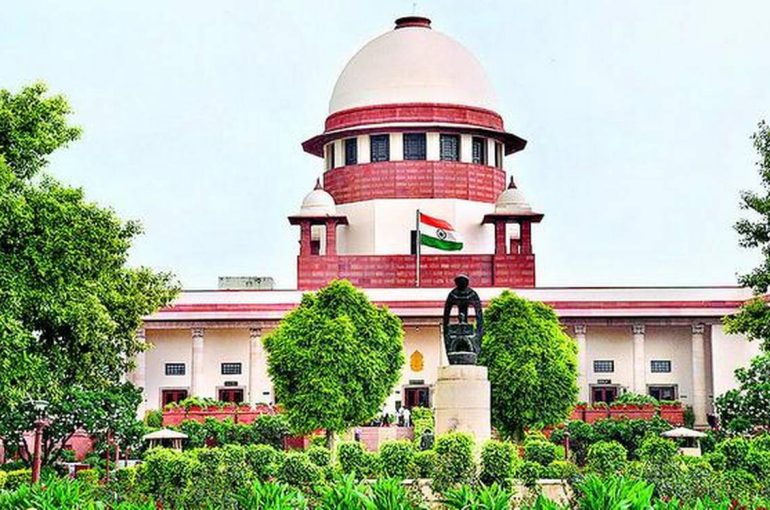
The Supreme Court of India, in Lakshmanan v. State through the Deputy Superintendent of Police & Others, SLP (Crl.) Nos. 6647–6650 of 2025, reported as 2025 INSC 1483, delivered a significant judgment on 19 December 2025. The decision was rendered by a Division Bench comprising Justice B.V. Nagarathna and Justice R. Mahadevan.
This Judgment examines two critical facets of criminal procedure: first, the scope and meaning of the victim’s right to be heard under Section 15A(5) of the Scheduled Castes and Scheduled Tribes (Prevention of Atrocities) Act, 2015 and second, the limits of judicial discretion while granting bail in cases involving grave offences, prior misuse of bail and witness intimidation. It also clarifies the law governing annulment of bail orders and the impermissibility of directing joint trials at the bail stage.
BRIEF FACTS
The Appellant, Lakshmanan, a member of a Scheduled Caste community, alleged that on 24 February 2020, he and his friend Suresh were brutally attacked by the Accused persons while fencing agricultural land in Madurai District. The assault allegedly involved deadly weapons and caste-based abuse, leading to the registration of Crime No. 39 of 2020 under various provisions of the Indian Penal Code, including Section 307, along with Section 3(2)(va) of the SC/ST (POA) Act.
The Accused were initially granted bail. While on bail, several of them allegedly murdered Suresh, a key injured eyewitness, resulting in registration of Crime No. 202 of 2022 for offences including Section 302 IPC. In view of this grave development, bail earlier granted in the first case was cancelled.
Despite repeated rejection of bail by the Trial Court, the Madras High Court, by a common Judgment dated 09 April 2025, granted bail to the Accused in Crime No. 39 of 2020 and further directed a joint trial of both criminal cases. Aggrieved by the grant of bail and the direction for joint trial, the de facto Complainant approached the Supreme Court.
ISSUES OF LAW
The Supreme Court was called upon to determine:
1) Whether the High Court violated Section 15A(5) of the SC/ST (POA) Act by allegedly failing to consider the victim’s objections before granting bail.
2) Whether the High Court was justified in granting bail despite prior cancellation of bail and allegations of serious misuse of liberty by the accused.
3) The distinction between cancellation of bail and annulment of a bail order on grounds of perversity or non-application of mind.
4) Whether the High Court could direct a joint trial of two distinct criminal cases at the stage of deciding bail applications.
ANALYSIS OF THE JUDGMENT
The Supreme Court undertook a nuanced analysis of Section 15A(5) of the SC/ST (POA) Act, reaffirming that the provision confers a mandatory procedural right upon victims to be heard in bail proceedings. The Court clarified, however, that the statute guarantees an opportunity of hearing, not a right to insist upon acceptance of the victim’s submissions or a detailed rebuttal of every objection raised. Since the victim in the present case was notified, participated in the proceedings and placed objections on record, the statutory requirement was held to be satisfied.
Notwithstanding compliance with Section 15A(5), the Court found the Bail Order to be fundamentally flawed. It drew a clear distinction between cancellation of bail due to subsequent misconduct and annulment of a bail order that is itself vitiated by illegality, arbitrariness or perversity. Applying settled principles, the Court held that the High Court had ignored determinative factors, including the earlier cancellation of bail, the murder of a prime witness while the accused were on bail and persistent allegations of witness intimidation and obstruction of justice.
The Supreme Court found that the High Court failed to meaningfully assess the gravity of the offences, the applicability of the SC/ST (POA) Act, the criminal antecedents of the Accused and the societal impact of releasing them on bail. Reliance on the pendency of a civil dispute between the parties was held to be wholly irrelevant in the face of serious criminal allegations. The Bail Order was thus characterised as suffering from non-application of mind and perversity, warranting interference.
On the issue of joint trial, the Court emphatically reiterated that separate trials are the rule and joint trials are the exception. Crime No. 39 of 2020 and Crime No. 202 of 2022 arose from distinct FIRs, involved different incidents separated by time and were founded on separate evidentiary matrices. By directing a joint trial at the bail stage, the High Court not only misapplied Sections 218–223 CrPC (and corresponding BNSS provisions) but also impermissibly encroached upon the Trial Court’s discretion. Such a direction, the Court held, travels beyond the scope of bail jurisdiction and is legally unsustainable.
CONCLUSION
The decision in Lakshmanan v. State is a strong reaffirmation of principled bail jurisprudence in cases involving caste-based atrocities and grave offences. While upholding the Victim’s statutory right to be heard, the Supreme Court has clarified that procedural compliance cannot shield a bail order that is otherwise arbitrary or perverse.
By annulling the High Court’s Bail Order and setting aside the direction for joint trial, the Judgment reinforces judicial discipline, protects the integrity of the trial process and sends a clear message that liberty cannot be extended at the cost of witness safety, fairness of proceedings or public confidence in the justice system; particularly in cases implicating vulnerable and marginalised communities.
SARTHAK KALRA
Senior Legal Associate
The Indian Lawyer & Allied Services
Please log on to our YouTube channel, The Indian Lawyer Legal Tips. To learn about various aspects of the law, watch our latest video, titled –“Child Custody Laws India 2025 | Mother vs Father Rights Explained | Advocate Sushila Ram Varma”

Leave a Reply