



















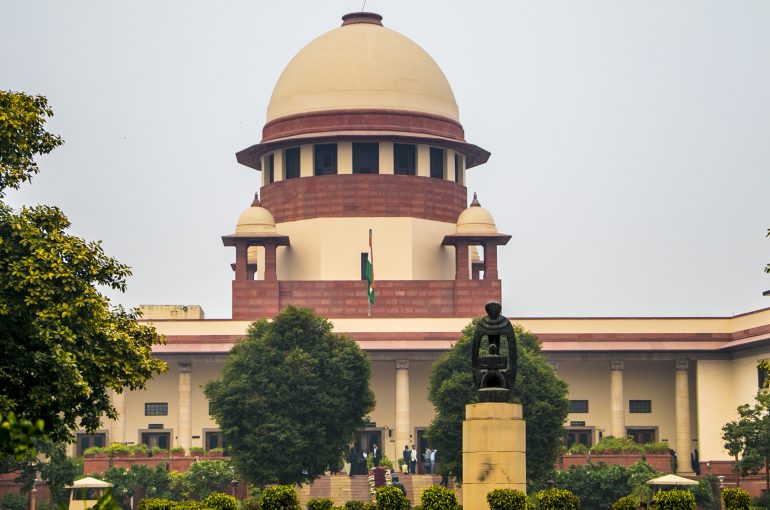
COOPERATION DOES NOT MEAN SELF-INCRIMINATION: SUPREME COURT SHIELDS ARTICLE 20(3) IN NDPS ANTICIPATORY BAIL

INTRODUCTION
In Vinay Kumar Gupta v. State of Madhya Pradesh, Criminal Appeal arising out of SLP (Crl.) No. 20215 of 2025, decided on 16 February 2026, the Supreme Court of India, comprising Justice Sanjay Kumar and Justice K. Vinod Chandran, set aside the Order of the Madhya Pradesh High Court denying anticipatory bail in an NDPS case.
The Court held that while an accused is obliged to cooperate with investigation, such cooperation cannot extend to violation of the constitutional protection against self-incrimination under Article 20(3). The refusal to hand over a mobile phone, in the circumstances of the case, could not be equated with non-cooperation warranting custodial interrogation.
BRIEF FACTS
The case arose from Crime/FIR No. 453/2025 dated 18 June 2025 registered at Police Station Semariya, District Rewa, Madhya Pradesh. The FIR alleged offences under Sections 8, 21 and 22 of the Narcotic Drugs and Psychotropic Substances Act, 1985, along with Sections 13 and 5 of the Drugs (Control) Act, 1950.
The investigation pertained to seizure of 710 bottles of cough syrup. Although the contraband was allegedly recovered from a car belonging to the Appellant, Vinay Kumar Gupta, he was not named in the FIR.
The High Court of Madhya Pradesh rejected his Application for Anticipatory Bail on 16 September 2025. The Appellant thus approached the Supreme Court. On 15 December 2025, the Supreme Court granted interim protection from arrest, subject to joining and cooperating with the investigation.
The State subsequently filed a Counter Affidavit stating that although the Appellant had joined the investigation on 2 February 2026, he had not handed over his mobile phone. This, according to the prosecution, indicated lack of full cooperation.
ISSUES OF LAW
The principal issue before the Court was whether refusal to hand over a personal mobile phone during investigation could justify denial of anticipatory bail in an NDPS case.
Closely linked to this was the question whether the requirement to “cooperate with investigation” under anticipatory bail conditions can compel an accused to potentially incriminate himself, thereby infringing Article 20(3) of the Constitution.
ANALYSIS OF THE JUDGMENT
The Supreme Court made a clear constitutional distinction between legitimate investigative cooperation and compelled self-incrimination.
The Bench noted that the Appellant had joined the investigation in compliance with the Interim Order. The only grievance raised by the State was his failure to hand over his mobile phone. The Court held that it is for the investigating agency to complete its investigation in accordance with due procedure of law. However, the Agency cannot insist upon the Accused incriminating himself.
The Court observed in unequivocal terms that “Cooperating with the investigation does not extend to violation of the Constitutional right against self-incrimination.” This articulation is significant, particularly in the context of digital devices, which often contain expansive personal data beyond the scope of a specific allegation.
The Court further found that there were no grounds made out for custodial interrogation at that stage. The Appellant was not named in the FIR, had joined the investigation and was cooperating within legal limitations. The mere fact that the vehicle belonged to him, without more, did not automatically justify arrest.
Importantly, while granting relief, the Court imposed a safeguard: anticipatory bail would operate subject to continued cooperation with investigation. The Appellant was directed to comply with the conditions stipulated under Section 482(2) of the Bharatiya Nagarik Suraksha Sanhita, 2023 and the Court clarified that no observations were made on the merits of the case.
The Order thus reflects a calibrated approach; protecting liberty without prejudging the prosecution.
CONCLUSION
This ruling carries significance beyond the immediate facts of an NDPS prosecution. By reaffirming that investigative cooperation cannot override the protection against self-incrimination, the Supreme Court has reinforced a foundational constitutional safeguard in the digital age.
The Judgment underscores that anticipatory bail jurisprudence must balance the rigor of special statutes like the NDPS Act with the enduring guarantees of Article 20(3). Liberty cannot be made contingent upon surrendering constitutional rights.
At a time when digital evidence plays an increasingly central role in criminal investigation, the Court’s observation assumes broader importance: the State may investigate, but it must do so within the bounds of constitutional discipline.
SARTHAK KALRA
Senior Legal Associate
The Indian Lawyer & Allied Services

Leave a Reply