



















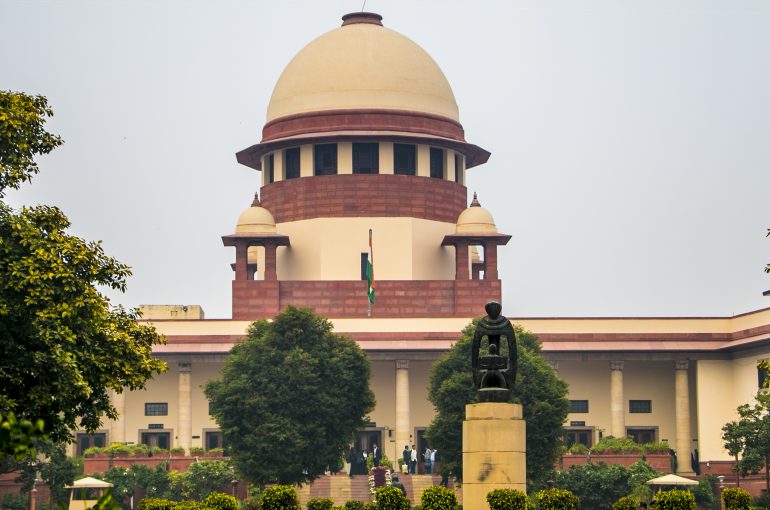
PATIENT CARE VS MEDICAL NEGLIGENCE: SUPREME COURT RESTORES POWERS OF THE WEST BENGAL CLINICAL ESTABLISHMENT COMMISSION

Introduction
The Supreme Court of India has delivered a significant Judgment addressing the jurisdictional boundaries between regulatory commissions and medical councils in healthcare dispute resolution. In Kousik Pal v. B.M. Birla Heart Research Centre & Others (Civil Appeal arising out of SLP(C) No. 8365/2024), the Two Judge Bench comprising Justice Sanjay Karol and Justice Manoj Misra, resolved a critical tension in India’s healthcare regulatory framework. The case examines whether the West Bengal Clinical Establishment (Registration, Regulation and Transparency) Act, 2017 empowers the State’s regulatory commission to independently assess the qualifications of medical professionals and determine service deficiencies without infringing upon the exclusive domain of medical councils to examine professional negligence.
The Appellant’s challenge centered on a division bench decision, that had overturned findings by the West Bengal Clinical Establishment Regulatory Commission, which had awarded compensation for institutional failures in providing healthcare services. The Supreme Court’s reversal of the High Court’s Judgment clarifies the scope of regulatory authority and reaffirms the Commission’s mandate to evaluate institutional compliance with minimum standards.
Factual Background
The tragedy underlying this dispute occurred in May 2017 when Ms. Aarti Pal, the Appellant’s mother, was hospitalized at B.M. Birla Heart Research Centre in Kolkata. After five days of treatment without clinical improvement, her primary consultant Dr. Shuvo Dutta recommended transfer to Calcutta Medical Research Institute. At approximately 9:15 p.m. on May 7, 2017, a discharge summary was prepared by Dr. Tanmoy Chakraborty documenting her condition as ‘stable’, a characterization the doctor later acknowledged as erroneous and not merely clerical.
The transfer occurred in the early morning hours of May 8, 2017, at around 1:45 a.m. Remarkably, approximately 16 hours following her admission at the receiving facility, Mrs. Pal died. The Appellant subsequently filed a complaint on May 12, 2017, alleging negligence in detection and diagnosis, inappropriate medication, delayed transfer and misrepresentation of his mother’s condition to the family.
Court’s Decision
The Supreme Court analyzed the statutory framework with meticulous attention to legislative language and intent. The Judgment emphasized that the Preamble of the 2017 Act explicitly mandates regulation and preservation of minimum standards for facilities and services in clinical establishments. This foundational objective required the regulatory commission to ensure that personnel employed meet the institutional prerequisites for their assigned roles.
The Court dissected the definition of ‘service provider’ within the Statute, observing that both medical professionals and paramedical staff must be ‘appropriately trained and qualified’ with ‘specific skills relevant to particular healthcare services.’ The Court determined that absent recognized qualifications, individuals cannot satisfy this statutory definition, making their employment a deficiency in institutional practice rather than a finding of individual professional negligence.
A critical piece of evidence reinforced this conclusion, which was a letter from the Medical Council of India dated June 25, 2019, explicitly stated that the minimum qualification for clinical interpretation of echocardiogram data is MD (Medicine), with cardiology specialists holding DM (Cardiology) qualifications being even more appropriately positioned. Dr. Giri did not possess the minimum qualification. The Court rejected the High Court’s selective interpretation of this letter, which had attempted to characterize the communication differently.
The Judgment further determined that by employing unqualified personnel in roles requiring specialized expertise, the hospital had created a ‘major deficiency’ under Section 29 of the Act, one posing imminent danger that could not be rectified within reasonable timeframes. This finding triggered the Commission’s authority to award compensation under Section 33, with minimum compensation in cases of death set at ten lakh rupees.
Importantly, the Supreme Court distinguished between the Commission’s proper function and the medical council’s exclusive domain. The Commission properly examined service quality and institutional compliance without rendering judgments on whether individual practitioners committed negligence, which is a determination reserved for medical councils. The Commission had explicitly acknowledged this boundary by refraining from making negligence findings.
Conclusion
The Supreme Court’s restoration of the Commission’s award represents a significant rebalancing of regulatory authority in healthcare. Rather than rendering the regulatory commission functionally impotent when service deficiencies intersect with clinical judgment, the Judgment articulates a coherent division of labor: commissions assess institutional compliance and employee qualifications, while medical councils evaluate professional conduct and negligence.
The Judgment carries broader implications for healthcare regulation across India. By affirming that minimum qualification requirements for service providers constitute a regulatory responsibility separate from professional negligence determinations, the Judgment preserves meaningful oversight while respecting specialized functions. The court’s observation that accepting the High Court’s reasoning would render the Commission’s functionality impossible, acknowledges that healthcare safety requires multiple layers of accountability operating within distinct but complementary jurisdictions.
The case ultimately reflects the judiciary’s recognition that bereaved families seeking accountability for institutional failures should not be left without recourse simply because such failures intersect with medical judgment. The Commission’s authority to ensure that clinical establishments employ appropriately qualified personnel serves the legislative intent of protecting patient safety and institutional integrity.
YASH HARI DIXIT
LEGAL ASSOCIATE
THE INDIAN LAWYER AND ALLIED SERVICES
Please log onto our YouTube channel, The Indian Lawyer Legal Tips, to learn about various aspects of the law. Our latest Video, titled “Child Custody Laws India 2025 | Mother vs Father Rights Explained | Advocate Sushila Ram Varma” can be viewed at the link below:

Leave a Reply