



















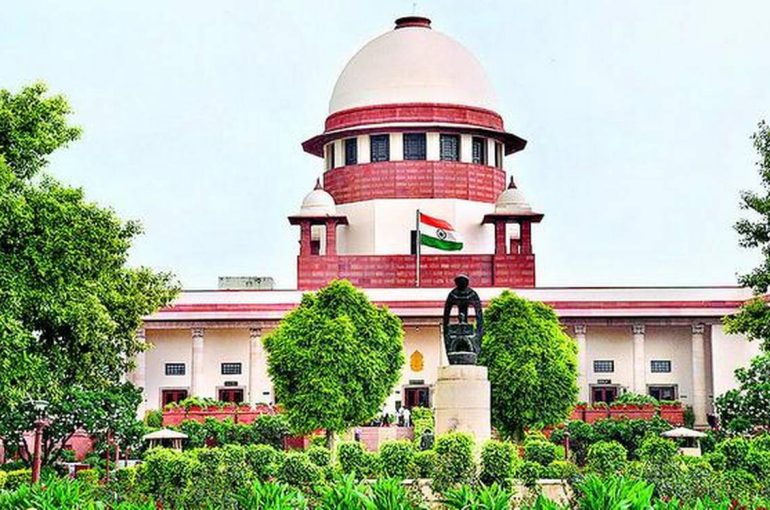
SUPREME COURT HOLDS WHILE DECLINING TO QUASH FIR, HC SHOULD NOT DIRECT POLICE TO FOLLOW S.41A CRPC PROCEDURE

Introduction
The Supreme Court of India’s Judgment in Practical Solutions Inc. v. The State of Telangana & Others (Special Leave Petition (Criminal) No. 953 of 2026, decided on January 19, 2026) addresses a critical dimension of criminal procedure, the necessity of affording parties a meaningful opportunity to present their case before adjudication. The matter was heard before a Bench comprising Justice J.B. Pardiwala and Justice Satish Chandra Sharma. This decision reinforces the constitutional principle that procedural fairness must not be compromised, even when the substantive merits of a case appear settled.
Factual Background
The case originated from a criminal petition filed before the High Court of Telangana (Criminal Petition No. 15489 of 2025) concerning allegations against the Respondent Accused persons. The allegations pertained to offences under Sections 316(2), 318(4) read with 61(2) of the Bharatiya Nyaya Sanhita (BNS), which carry a punishment of less than seven years imprisonment.
In this Criminal Petition, the Respondent accused persons sought relief before the High Court. What transpired subsequently became the focal point of the Supreme Court’s intervention. The High Court of Telangana, in its order dated November 26, 2025, disposed of the petition without affording a hearing to the de facto Complainant, the organization that had initiated the proceedings, despite the Complainant’s presence before the High Court. This lack of notice and opportunity to present submissions represented a fundamental procedural lapse that precipitated the appeal before the Supreme Court.
Contentions of Parties
The Appellant Practical Solutions Inc., represented by senior counsel Mr. R. Basant, advanced two principal contentions. First, the Appellant argued that the High Court should not have entertained the writ petition at all. Second and more significantly, the Appellant contended that even if the High Court was inclined to entertain the petition, the de facto Complainant should have been granted a proper hearing. The Appellant emphasized that the High Court disposed of the matter on the very first day without issuing notice to either the State or the de facto complainant, thereby denying a fundamental right to be heard.
The Appellant further highlighted a substantive legal issue concerning the nature of the relief granted. The Petition sought quashing of the First Information Report (FIR), yet the High Court had issued directions to the Investigating Officer regarding Section 35(3) of the Bharatiya Nyaya Sanhita (previously Section 41-A of the Criminal Procedure Code, 1973), relating to investigative procedures. This indirect relief, according to the Appellant, undermined the substantive claim for FIR quashing without a proper legal foundation.
Court’s Decision
The Supreme Court sided with the Appellant’s primary grievance concerning procedural fairness. The Bench observed that no substantive relief could be granted without affording the de facto Complainant an opportunity to present its case and contentions. The Court declined to express any opinion on the substantive merits of the High Court’s Order but found the procedural violation to be fatal to the legitimacy of the judgment.
Consequently, the Supreme Court set aside the impugned order of the High Court dated November 26, 2025 and remitted the matter back for fresh consideration. The Court specifically directed the High Court to issue notice to Practical Solutions Inc. as the de facto complainant and afford it a full hearing before passing a final order. The Supreme Court also imposed an interim protective measure: no coercive steps would be taken against the respondent accused persons (respondent nos. 2 and 3) until the High Court issued a fresh order following proper procedure.
Additionally, the Supreme Court addressed an important legal principle regarding the scope of relief available in petitions seeking FIR quashing. The Court observed that when a petition prays for quashing of an FIR, the High Court cannot indirectly grant relief by directing procedural compliance without first establishing a prima facie case for FIR quashing. This principle was reinforced by reference to the Court’s earlier decision in Neharika Infrastructure (P) Ltd. v. State of Maharashtra (2021) 19 SCC 401. Such orders indirectly circumvent the substantive merits assessment required for quashing relief and therefore exceed the scope of permissible judicial discretion.
Conclusion
This Judgment stands as a significant reaffirmation of the principle that procedural regularity is indispensable to the administration of justice. Even when courts believe they are acting in the interest of fairness or following settled precedent, they cannot ignore the fundamental right of affected parties to be heard. The Supreme Court’s intervention demonstrates that the legitimacy of judicial orders depends not merely upon their substantive correctness but equally upon the fairness of the procedure through which they are reached.
The Judgment also clarifies the jurisprudence surrounding FIR quashing petitions, establishing that indirect relief cannot be granted in lieu of substantive adjudication. This prevents courts from avoiding difficult decisions on the merits by resorting to procedural directions. For practitioners and litigants, this judgment underscores the necessity of vigilantly protecting procedural rights, as their violation can render otherwise well-intentioned judicial orders vulnerable to reversal.
YASH HARI DIXIT
LEGAL ASSOCIATE
THE INDIAN LAWYER AND ALIED SERVICES
Please log onto our YouTube channel, The Indian Lawyer Legal Tips, to learn about various aspects of the law. Our latest Video, titled “Understanding SARFAESI Act | Rights of Borrowers 2025, DRT, Supreme Court Judgments” can be viewed at the link below:

Leave a Reply